
Share:   |
Recently I was asked to update a decade old article summarizing the scientific research on the cause of homosexuality. This present article will give a general summary of what dozens of scientific journals have concluded over the past 10 years. While more is known about the different regions (nuclei) of specific parts of the brain and the exact mechanisms involved, the basic conclusion of this research remains unchanged.
Homosexuality effects from 8% to 15% of all males and slightly less for females. To put this in context, there are as many gays and lesbians in America today (2011) as there are unemployed citizens. Most carry the burdon of hiding their sexual identity for fear of being disrespected or mistreated by the general population who remain ignorant to the causes and circumstances of homosexuality. This is puzzling in light of the plethora of investigative work that has been done on the phenomenon.
A Review of Scientific Research on Homosexuality
In 1959 a report was published with the title, "Organizing action of prenatally administered testosterone propionate on the tissues mediating mating behavior in the female guinea pig" by Charles H. Phoenix, Robert W. Goy, Arnold A. Gerall, and William C. Young [6]. This was one of those "animal studies" -- of interest only to psychologists and neurologists. In 1991, the popular journal, Science, published a paper that revisited the 1959 report and included many more recent studies. Their paper came to the conclusion:
"This finding indicates that INAH [part of the hypothalamus] is dimorphic with sexual orientation, at least in men, and suggests that sexual orientation has a biological substrate." [4]
Ever since Science published the article, I've been waiting for the big changes. But they have been slow. Public opinion still maintains that homosexuals have chosen to live a deviant lifestyle. Some of the worst hate towards homosexuals -- from an anti-homosexual religious group that targets veteran's funerals [below] -- comes from the belief that it is a chosen lifestyle.
Ignorance about the cause of homosexuality has been responsible for many teen suicides as well as violence against teens who are perceived as different by their classmates. School officials, even parents of homosexual children, do little to clarify this condition and seem often to turn away from the issue all together.

Many church leaders continue to equate homosexuality as a sin, suggesting that through prayer they could be "made whole." The husband of one of the top Republican presidential candidates runs a clinic, claiming to be able to "cure" homosexuality as if it were merely a bad decision. This view is echoed in many religious churches, based on the writings of Apostle Paul:
"Do not be deceived: Neither the sexually immoral nor idolaters nor adulterers nor male prostitutes nor homosexual offenders nor thieves nor the greedy nor drunkards nor slanderers nor swindlers will inherit the kingdom of God. And that is what some of you were. But you were washed, you were sanctified, you were justified in the name of the Lord Jesus Christ and by the Spirit of our God." -- I Corinthians 6:9-11 (NIV)
What's going on here? Can homosexuality be "washed away" with Conservative beliefs?
Homosexuality: Born That Way
The Conservapedia states that:
"The causes of homosexuality are attributable to man's sinful nature, nurture and environment, and personal choice." [5]
But scientific research directly contradicts this.
Homosexuality is a congenital condition much like being "left handed". Before you dismiss the analogy remember there were times in history when being left-handed (the archaic meaning of "sinister") meant you were possessed by evil. You could have been hanged, burned, stoned to death or buried alive. Having personally lived in an Arab country, I can assure you that being left-handed was something that I did my best to hide. Today we know that left handedness is the result of excess testosterone slowing the growth of the left-hemisphere in the developing fetal brain.[2] It's not a choice. It's a condition.
Ironically, homosexuality is caused much the same way as being left-handed. Instead of excess testosterone, the developing male fetus receives too little, often too late.
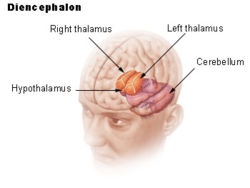 Researchers naturally focus on an organ in the brain called the hypothalamus because it is known to be responsible for gender preference. It is also what is called dimorphic, meaning its structure is different in males and females. There's also differences in the hypothalamus between homosexuals and heterosexuals. Recent studies of the different sections or nuclei have revealed much that was not known before. And there have also been some surprises.
With advances in laboratory technology, a specific region of the hypothalamus, called the sexually dimorphic nucleus (SDN), has been the focus of some interesting research. The SDN is the most conspicuous anatomical male/female difference in the mammalian brain. The nuclei is 3 to 8 times larger in males than in females. Another nuclei of the hypothalamus, INAH-3, reveals that heterosexual males have double the volume of both homosexual and female subjects.
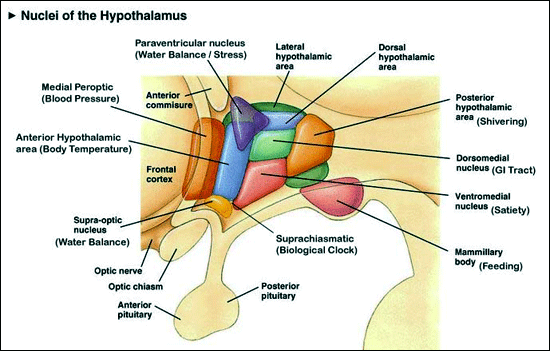
"As has been reported previously, INAH 3 was more than twice as large in the heterosexual men as in the women. It was also, however, more than twice as large as in the homosexual men." [4]
A review of current research shows that there is no evidence supporting a social cause for homosexuality [8, 9]. On the contrary, there are multiple studies, both with animals and humans, demonstrating the causative relationship with the pre-natal testosterone during a critical stage in "defeminization".
Dr. Harry Harlow's famous studies with Rhesus monkeys [5] demonstrated that such things as love and the ability to nurture healthy children was a learned skill that could be altered by after birth experiences. This non-biologic effect may play a role in female homosexuality and may also be a contributing factor in the degree to which congenital homosexuality is either expressed or repressed. But they do not cause homosexuality.
How Do Brains Get Gender?
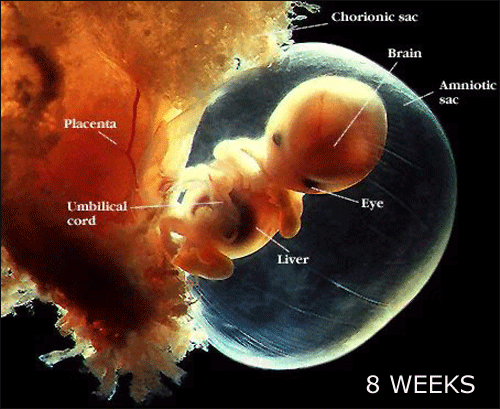
Embryology teaches that early embryos all start out as female. At some point in early gestation, if the chromosomes destine the fetus to be male, the embryo is altered by the genetically programmed addition of certain hormones, called androgens. These androgens, especially testosterone, instruct the embryo to develop male characteristics. In their absence, the embryo continues to develop into a female.
An "XX" pair of chromosomes will yield a female; an "XY" pair will result in a male. The "X" is always contributed from the mother (since she has only "X's"), but the father can contribute either an "X" or a "Y"-- so it is the father's genetic contribution that determines the gender of the child. If homosexual men have "XY" pairs which are typically male in all respects, what makes their hypothalamus different?
In a paper published almost a quarter of a century ago, a research psychologist at Villanova University was also puzzled about gender. Dr. Ingebog Ward was studying the sexual behavior of rats, years before the role of the hypothalamus was even suspected of gendering human brains. [6]
Dr. Ward divided some pregnant rats into three groups. Suspecting that something special might be happening in the early stages of pregnancy, she subjected the first group to stress during the first ten days of gestation by irritating the mother rats to bright lights, noise and annoying vibrations. Ten days in a rat's pregnancy corresponds to the first trimester (3 months) of a human pregnancy. The second group was subjected to stress towards the end of their pregnancy, just before birth. The third group was comprised of male offspring from both prenatal stressed mothers and unstressed mothers. These babies were subjected to the same stress producing stimuli.
Dr. Ward then allowed all the males to grow to adulthood without further interference. She then placed each group of males in cages with healthy females to observe their ability and desire to mate with normal adult females. Here is what happened:
"Abstract: Male rats were exposed to prenatal (i.e. before they were born) or postnatal (after they were born) stress, or both. The prenatally stressed males showed low levels of male copulatory behavior and high rates of female lordotic responding (i.e. "lordotic" refers to mounting behavior which usually occurs during mating). Postnatal stress had no effect. The modifications are attributed to stress-mediated alterations in the ratio of adrenal to gonadal androgens during critical stages of sexual differentiation. Specifically, it appears that stress causes an increase in the weak adrenal androgen, androstendione, from the maternal fetal adrenal cortices, or both, and a concurrent decrease in the potent gonadal androgen, testosterone." [6]
If the baby carries "XY" chromosomes and is destined to become a male, testosterone needs to activate the newly forming hypothalamus. This is the first known critical phase of "defeminization" when something can go awry, upsetting the master plan.[10]
If a mother is stressed during the early stages of pregnancy, she will release an adrenaline related hormone into her shared bloodstream with her unborn baby. This hormone, called androstendione, is structurally similar to testosterone, the male hormone. Both are androgens, but testosterone is more than twenty times as potent as androstendione.
It has also recently been suggested that testosterone actually breaks down to estradiol in some way that androstendione may not [12, 15], further implicating this androgen in disrupting the process of early brain development.
Because the stress hormone seems to mimic testosterone, there is the delay or blockage of the effectiveness of testosterone, even if it is plentiful. This causes a disturbance in the "defeminization" of the hypothalamus [7].
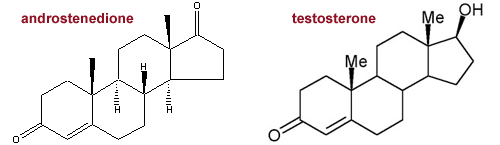
In 1972, Dr. Ward had no idea that androstendione in male pregnancies would prevent or inhibit the hypothalamus to develop into a healthy male brain, but this stress-related hormone now appears to do just that. The brain makes its gender commitment very early in development and, once committed to either male or female, it can not change.
The interference with environmental testosterone in the later stages of pregnancy does little or nothing to inhibit gender development of the body. By mid-pregnancy, the gonads can produce enough systemic testosterone to develop the body along male plans; however, problems do happen in these later stages [11]. Sometimes the receptors which receive testosterone are defective or greatly reduced in number. This is generally seen as a defect resulting from the initial blocking of testosterone by the presence of other androgens [7]. This can inhibit the effectiveness of testosterone and cause a less effective defeminization.
In Doctor Ward's own words:
"...The present data support the hypothesis that exposure of pregnant rats to environmental stressors modifies the normal process of sexual behavior differentiation in male fetuses by decreasing functional testosterone and elevating androstenedione levels during prenatal development. During stress conditions plasma testosterone emanating from the gonads decreases while adrenal androstenedione rises. The molecular structure of the two androgens, being very similar, it is postulated that the two hormones compete for the same receptor sites. Since androstenedione is a less potent androgen than testosterone, the decrease in male copulatory ability and increased lordotic potential seen in the prenatally stressed animals of the present study would be expected. The relative difference in potency between testosterone and androstendione has been repeatedly demonstrated. [Ibid.]
But Why?
 As we begin to understand that homosexuality is not inherited, we note that it occurs in more or less the same frequency of the population. This could suggest that a preference for one's own gender served some evolutionary benefit. If not, we should expect the perceived vulnerability of the developing fetal brain to have been corrected. But what could the benefit be?
Again, in Doctor Ward's own words:
"The resulting alterations in sexual behavior provide the basis for an effective population control mechanism, since offspring so affected would not possess the behavioral repertoire necessary to contribute to population growth. Thus, the environment, by triggering an adrenal stress response, may control the reproductive capacity of successive generations of differentiating fetuses and, thereby, population size. "
[Some more recent explanations from a 2010 ScienceDaily article can be found at the bottom of this page.]
What about Lesbians?
The developing female fetus is expecting no pre-natal testosterone. This molecule is significant only if the fetus is destined to be male. Androstenedione, produced by maternal stress, closely resembles testosterone. Even a small amount of this molecule during the critical first trimester of pregnancy could be enough to make the developing hypothalamus defeminized or masculine. So the same mechanism can possibly explain both male and female homosexuality.
Now what?
I approached some homosexual blogs before posting this article on viewzone. I summarized the facts and asked for their replies. Some were critical of calling their gender preference a "condition" and thought that implied a defect. Others reminded me that even the anti-discrimination laws often only include protection against discrimination based on sex (meaning male of female) and that being recognized as a congenital phenomenon would only be protected if (a) it was considered a "disability" or (b) homosexuality would be covered under sex discrimination (meaning that a third gender would have to be added). In short, there was a kind of apathy.
What do you think about this?
[1] Swaab, DF, Hofman, MA, "Sexual differentiation of the human hypothalamus in relation to gender and sexual orientation", Trends Neuroscience 1995 June, 18(6): 264-70.
[2] NORMAN GESCHWIND, PETER BEHANI!,Left-handedness: Association with immune disease, migraine, and developmental learning disorder,Proc. Nati Acad. Sci. USA, Vol. 79, pp. 5097-5100, August 1982
[3] Exp Clin Endocrinol. 1983 Jan;81(1):83-7. Stressful events in prenatal life of bi- and homosexual men. Dorner G, Schenk B, Schmiedel B, Ahrens L.
[4] S. LaVay, "A difference in hypothalamic structure between heterosexual and homosexual men", Science 30 August 1991, Vol. 253 no.5023 pp 1034-1037
[5] http://www.conservapedia.com/Causes_of_Homosexuality
[6] "Parental Stress Feminizes and Demasculizes the Behavior of Males", Science, January 7, 1972 (83-84).
[7] Swaab DF, Chung WC, Kruijver FP, Hofman MA, Ishunina TA., "Sexual differentiation of the human hypothalamus", Adv Exp Med Biology, 2002;511:75-100; discussion 100-5
[8] Dohler, KD, "The pre- and postnatal influence of hormones and neurotransmitters on sexual differentiation of the mammalian hypothalamus", Int Rev Cytology, 1991;131:1-57.
[9] Savic I, Garcia-Falgueras A, Swaab DF., "Sexual differentiation of the human brain in relation to gender identity and sexual orientation", Prog Brain Res., 2010;186:41-62.
[10] Kula K, Słowikowska-Hilczer J., "Sexual differentiation of the human brain", Przegl Lek. 2000;57(1):41-4.
[11] Bradley SJ, Oliver GD, Chernick AB, Zucker KJ., "Experiment of nurture: ablatio penis at 2 months, sex reassignment at 7 months, and a psychosexual follow-up in young adulthood", Pediatrics,1998 Jul;102(1):e9.
[12] Wu MV, Manoli DS, Fraser EJ, Coats JK, Tollkuhn J, Honda S, Harada N, Shah NM., "Estrogen masculinizes neural pathways and sex-specific behaviors", Cell, 2009 Oct 2;139(1):61-72.
[13] Balthazart J, Tlemçani O, Ball GF., "Do sex differences in the brain explain sex differences in the hormonal induction of reproductive behavior? What 25 years of research on the Japanese quail tells us", Horm Behav. 1996 Dec;30(4):627-61.
[14] Wallen K., "The Organizational Hypothesis: Reflections on the 50th anniversary of the publication of Phoenix, Goy, Gerall, and Young (1959)", Horm Behav. 2009 May;55(5):561-5.
[15] W.J. Friedman, B.S. McEwen, C.D. Toran-Allerand and J.L. Gerlach, "Perinatal development of hypothalamic and cortical estrogen receptors in mouse brain: Methodological aspects", Accepted 14 June 1983. Available online 11 March 2003.
|
ScienceDaily (Oct. 26, 2009) -- Prenatal sex-based biological differences extend to genetic expression in cerebral cortices. The differences in question are probably associated with later divergences in how our brains develop. This is shown by a new study by Uppsala University researchers Elena Jazin and Bjorn Reinius, which has been published in the latest issue of the journal Molecular Psychiatry.
Professor Elena Jazin and doctoral student Bjorn Reinius at the Department of Physiology and Developmental Biology previously demonstrated that genetic expression in the cerebral cortices of human beings and other primates exhibits certain sex-based differences. It is presumed that these differences are very old and have survived the evolutionary process. The purpose of the new study was to determine whether they appear during the process of brain development or first upon the conclusion of that process. Identifying the initial genetic mechanisms that prompt the brain to develop in a female or male direction is a long-range research objective. The Uppsala University researchers analysed data, on the basis of sex, from another extensive study of the prenatal human brain. "The results show that many of the genes situated on the Y chromosome are expressed in various parts of the brain prior to birth and probably provide a developmental basis for the sex-based differences exhibited by adult brains," according to Elena Jazin. More than a third of Y-chromosomal genes appear to be involved in sex-based human brain differentiation. Some of the genetic activity in question is evident in the adult brain, while other of it only appears at earlier stages of brain development. It is yet unknown whether the differences in genetic expression among female and male brains have any functional significance. "The findings are consistent with other factors, such as environment, also playing a role in how we develop," emphasizes Elena Jazin. Knowledge of the development of sex-based brain differences is of potential significance for the treatment of brain disturbances and diseases. A large number of psychiatric illnesses, including depression and autism, affect men and women differentially. "Taking account of sex-based differences is crucial to the study of normal and abnormal brain activity," according to Elena Jazin.
Some further reading:
*Symmetry Of Homosexual Brain Resembles That Of Opposite Sex Recent Article from ScienceDaily February 2010: Potential Evolutionary Role for Same-Sex Attraction
Male homosexuality doesn't make complete sense from an evolutionary point of view. It appears that the trait is heritable, but because homosexual men are much less likely to produce offspring than heterosexual men, shouldn't the genes for this trait have been extinguished long ago? What value could this sexual orientation have, that it has persisted for eons even without any discernible reproductive advantage? One possible explanation is what evolutionary psychologists call the "kin selection hypothesis." What that means is that homosexuality may convey an indirect benefit by enhancing the survival prospects of close relatives. Specifically, the theory holds that homosexual men might enhance their own genetic prospects by being "helpers in the nest." By acting altruistically toward nieces and nephews, homosexual men would perpetuate the family genes, including some of their own.
Past research has shown that the fa'afafine are much more altruistically inclined toward their nieces and nephews than either Samoan women or heterosexual men. They are willing to babysit a lot, tutor their nieces and nephews in art and music, and help out financially -- paying for medical care and education and so forth. In a new study, the scientists set out to unravel the psychology of the fa'afafine, to see if their altruism is targeted specifically at kin rather than kids in general. They recruited a large sample of fa'afafine, and comparable samples of women and heterosexual men. They gave them all a series of questionnaires, measuring their willingness to help their nieces and nephews in various ways -- caretaking, gifts, teaching -- and also their willingness to do these things for other, unrelated kids. The findings, reported on-line this week in the journal Psychological Science, lend strong support to the kin selection idea. Compared to Samoan women and heterosexual men, the fa'afafine showed a much weaker link between their avuncular -- or uncle like -- behavior and their altruism toward kids generally. This cognitive dissociation, the scientists argue, allows the fa'afafine to allocate their resources more efficiently and precisely to their kin -- and thus enhance their own evolutionary prospects. To compensate for being childless, each fa'afafine would have to somehow support the survival of two additional nieces or nephews who would otherwise not have existed. "If kin selection is the sole mechanism by which genes for male same-sex sexual attraction are maintained over time," the fa'afafine must be "super uncles" to earn their evolutionary keep, explains Vasey. Consequently, Vasey suggests "that the fa'afafine's avuncularity probably contributes to the evolutionary survival of genes for male same-sex sexual attraction, but is unlikely to entirely offset the costs of not reproducing." Do these findings have any meaning outside of Samoa? Yes and no. Samoan culture is very different from most Western cultures. Samoan culture is very localized, and centered on tight-knit extended families, whereas Western societies tend to be highly individualistic and homophobic. Families are also much more geographically dispersed in Western cultures, diminishing the role that bachelor uncles can play in the extended family, even if they choose to. But in this sense, the researchers say, Samoa's communitarian culture may be more -- not less -- representative of the environment in which male same-sex sexuality evolved eons ago. In that sense, it's not the bachelor uncle who is poorly adapted to the world, but rather the modern Western world that has evolved into an unwelcoming place.

New Primate Studies!--Androgens cause brain gender!--A must read. NEWS... Friday, June 5, 2009 Brains of gay men show similarities to those of heterosexual women, study reports The brains of gay men resemble those of straight women, according to research being published Tuesday that provides more evidence of the role of biology in sexual orientation. Using brain scanning equipment, researchers said they discovered similarities in the brain circuits that deal with language, perhaps explaining why homosexual men tend to outperform straight men on verbal skills tests -- as do heterosexual women. The area of the brain that processes emotions also looked very much the same in gay men and straight women -- and both groups have higher rates of depressive disorders than heterosexual men, researchers said. The study in Proceedings of the National Academy of Sciences, however, found the brain similarities were not as close in the case of gay women and straight men. Previous studies have found evidence that sexual orientation is hard-wired. More than a decade ago, neurobiologist Simon LeVay reported that a key area of the hypothalamus, a brain structure linked to sexual behavior, was smaller in homosexual men compared to heterosexual men. The latest study, led by Ivanka Savic of the Karolinska Institute in Stockholm, was significant in that it looked at areas of the brain that have nothing to do with sexual behavior, suggesting there was a basic biological link between sexual orientation and a range of brain functions. "The question is -- how far does it go?" said Dr. Eric Vilain, who studies human sexual development at UCLA and was not involved in the study. "In gay men, the brain is feminized. Is that limited to particular areas or is the entire brain female-like?" Vilain said his hunch was the entire brain was not feminized because "gay men have a number of masculine traits that are not present in women." Savic and colleagues used magnetic resonance imaging to measure brain volumes of two groups, each divided evenly between men and women: 50 heterosexuals and 40 homosexuals. They knew going into the study that in men the right cerebral hemisphere is largest but in women the left and right hemispheres are of equal size. The results showed that gay men had symmetrical brains like those of straight women, and homosexual women had slightly asymmetrical brains like those of heterosexual men. Language circuits are thought to be more symmetrical in straight women than in heterosexual men, the report said. The differences were pronounced. For example, the right cerebral hemisphere in heterosexual men was 624 cubic centimeters -- 12 greater than their left side. In homosexual men, the right hemisphere was 608 cubic centimeters -- 1 cubic centimeter smaller than the left. In heterosexual women, there was no volume difference between right and left hemispheres. But in homosexual women, their right hemisphere was 5 cubic centimeters larger than the left. Next, researchers used positron emission topography to measure blood flow in the amygdala, a brain area involved in processing emotions. The wiring of the amygdala in gay men more closely resembled that of straight women than straight men, researchers said. The amygdala of gay women looked more like those of straight men, according to the report. Savic said she believed the brain differences were forged in the womb or infancy, probably as a result of genetic or hormonal factors. She said she could not explain why the differences were more pronounced in homosexual men than in homosexual women. Marc Breedlove, a neuroscientist who studies sexual development at Michigan State University, said that in his studies with rats, changes in prenatal levels of testosterone caused the sort of brain alterations Savic observed in her study.
COMMENTS: Thank you for another awesome article! About the evolutionary 'usefulness' of gay people: I find the 'avuncular' angle very interesting. Also, a while ago I read about research into the ability of gay men and women to immediately recognize other gay people (the famous 'gay-dar'). I'm afraid I don't remember where I read it, but it should be google-able! The conclusion was that gay men and women have an enhanced ability for instant analysis of people and situations. In my opinion this could indicate another benefit for the family and/ or community for having some gays around. However, I don't like the term 'evolutionary usefulness', it feels so clinical. I myself have always felt that having gay friends is beneficial on many levels, as they are generally caring, expressive and original. I think it's no coincidence that many artists are gay, and I mean this in a good way. So any research into 'benefit' should also include social, creative, intellectual and spiritual aspects. To my mind these things are vital to our evolution as optimal human beings. Our very survival will depend on our ability to care for one another, not to mention thinking out of the box and adding colour to our lives. Regarding the spiritual side, in many cultures gay people (especially men) are considered to be another gender (as with the Samoans) with a specific spiritual role, which is held in regard by society. In some instances, such as in India, this ambivalent status will also make them more or less outcasts. I think that homophobia in our society has its roots in a similar fear of this ambivalence, not just in Christian values and mysogyny. Which is why it is so hard to root out. In Europe, our Nordic ancestors severely punished homosexuality. However, this was not (just) out of machismo or the harsh social rules of a warrior community. It also has to do with the specific spiritual roles of men and women. The Vikings had two kinds of shamans: diviners and healers, which could be both men and women, and true shamans (i.e. intermediaries to the spirit world), who were almost exclusively female. Shamanic ecstacy and spirit travel was the province of a number of goddesses, notably Freya. The only male god who ever gained this knowledge was Odin, who first hung on the tree for nine days to obtain the mystery of the runes, and then learned things like shamanic travel from Freya, which cost him an eye. To all mortal men this knowledge was forbidden as Odin's divine privilege (with the exception of berserker-like warrior ecstacy, which also was not for everyone). Any gay man would be more or less regarded as female, which was spiritually very threatening by reason of being potentially blasphemous. I think that any male shaman would be suspected of being gay, and vice versa. He would be held in awe, but also viewed with suspicion or even cast out. My guess is that this Nordic tradition is still in our genes somehow, and showing as prejudice. The above also explains, by the way, why in medieval Europe witches (i.e. healers and shamans) were mostly female, as this had been tradition for centuries. I hope the other side of this coin will prevail and that gay men and women will be recognized for the divine creatures that they are (some research into the spiritual sensitivity of gay people would show surprising results I think), and that they will be able to live their full potential spiritually and otherwise. And that the rest of us may benefit from their presence. (I am not an expert in Nordic sociology, but this is my intuition about my ancestors. So please correct me if I'm wrong.) Peace! Isabel
|


- In heterosexual women, the index and ring fingers are usually about the same length. In heterosexual men, the index finger is shorter, on average, than the ring finger. It's one of several differences between the sexes that seem to be set before birth, based on testosterone exposure.
- Every older brother a man has increases his chances of being gay. A man with four older brothers is three times more likely to be gay than a man with none. (Blanchard)
- Lesbians' finger lengths were, on average, more like men's. The same holds true for other traits, like eye-blink patterns and inner-ear function.(Breedlove)
- 75 percent of young boys who dress up like girls, play with dolls and consistently choose stereotypical female pursuits will grow up to be gay. A similar, though less pronounced, pattern is found in girls who prefer trucks over tea sets.
- Mothers and aunts of gay men had more offspring than female relatives of heterosexuals.
- In animal studies, about 8 percent of rams never father offspring because they only have eyes for other males. Australian sheepherders call them "shy breeders." (Roselli).
Some primate work has been done at the University of Wisconsin's Harlow Primate Research Center on the effects of stress and the importance of maternal care on the sexual behavior of monkeys; however, much of this work measured post-natal nurturing and was not experimentally designed to assess homosexual behavior. A review of this work suggest that the expression of healthy sexual behavior and successful knowledge of mating can be environmentally inhibited by the lack of parental nurturing. This work indicates a potential source of aberrant sexual behavior and dysfunction rather than simple homosexuality.
Currently, Dr. Simon LeVay, a neurobiologist at California's Salk Institute and founder of the Center for Gay and Lesbian Studies in Santa Monica, California, has been the most vocal proponent for some type of gendered brain influence on homosexuality but his work has unfortunately remained unreviewed by many professionals.
Some of LeVay's works are listed here for recommended reading:
Albrick's Gold - New York: Richard Kasak Books, 1997.
Queer Science - Cambridge: MIT Press, 1996.
City of Friends - Cambridge Press, 1995.
The Sexual Brain - Cambridge: MIT Press, 1993.
Are Lesbian Brains Different?
Study Suggests Difference in Lesbians' Brains
From Dr. Alan Cantwell, MD
WASHINGTON (AP) - Lesbians' brains react differently to sex hormones than those of heterosexual women, new research indicates.
That's in line with an earlier study that had indicated gay men's brain responses were different from straight men - though the difference for men was more pronounced than has now been found in women.
Lesbians' brains reacted somewhat, though not completely, like those of heterosexual men, a team of Swedish researchers said in Tuesday's edition of Proceedings of the National Academy of Sciences.
A year ago, the same group reported findings for gay men that showed their brain response to hormones was similar to that of heterosexual women.
In both cases the findings add weight to the idea that homosexuality has a physical basis and is not learned behavior.
"It shows sexual orientation may very well have a different basis between men and women ... this is not just a mirror image situation," said Sandra Witelson, an expert on brain anatomy and sexual orientation at the Michael G. DeGroote School of Medicine at McMaster University in Hamilton, Ontario.
"The important thing is to be open to the likely situation that there are biological factors that contribute to sexual orientation," added Witelson, who was not part of the research team.
The research team led by Ivanka Savic at the Stockholm Brain Institute had volunteers sniff chemicals derived from male and female sex hormones. These chemicals are thought to be pheromones - molecules known to trigger responses such as defense and sex in many animals.
Whether humans respond to pheromones has been debated, although in 2000 American researchers reported finding a gene that they believe directs a human pheromone receptor in the nose.
The same team reported last year on a comparison of the response of male homosexuals to heterosexual men and women. They found that the brains of gay men reacted more like those of women than of straight men.
The new study shows a similar, but weaker, relationship between the response of lesbians and straight men.
Heterosexual women found the male and female pheromones about equally pleasant, while straight men and lesbians liked the female pheromone more than the male one. Men and lesbians also found the male hormone more irritating than the female one, while straight women were more likely to be irritated by the female hormone than the male one.
All three groups rated the male hormone more familiar than the female one. Straight women found both hormones about equal in intensity, while lesbians and straight men found the male hormone more intense than the female one.
The brains of all three groups were scanned when sniffing male and female hormones and a set of four ordinary odors. Ordinary odors were processed in the brain circuits associated with smell in all the volunteers.
In heterosexual males the male hormone was processed in the scent area but the female hormone was processed in the hypothalamus, which is related to sexual stimulation. In straight women the sexual area of the brain responded to the male hormone while the female hormone was perceived by the scent area.
In lesbians, both male and female hormones were processed the same, in the basic odor processing circuits, Savic and her team reported.
Each of the three groups of subjects included 12 healthy, unmedicated, right-handed and HIV-negative individuals.
The research was funded by the Swedish Medical Research Council, Karolinska Institute and the Wallenberg Foundation.
Copyright 2006 The Associated Press.
Alan Cantwell M.D.
alancantwell@sbcglobal.net
http://www.ariesrisingpress.com